
Bathtub Reglazing vs Replacement in Concord, CA
If your Concord tub is dull, stained or stuck in a 1970s color, you have two real options: reglaze it or rip it out and replace it. They are not close on price or on the week of your life they cost. This page lays out the honest numbers — the cost delta, the lifespan you actually get from each, and the specific cases where replacement is the right call instead of reglazing.
Direct answer
Is it cheaper to reglaze or replace a bathtub in Concord?
Reglazing is far cheaper. A Concord reglaze runs $705–$870 and is done in a day. Replacing the same tub — demolition, a new tub, surround tile, waterproofing, plumbing and disposal — typically runs $3,000–$8,000 and takes a week. That is a $2,300–$7,100 difference for a sound tub that is only dated or surface-worn. Call (510) 746-8748 or book online for a free Concord quote.
How long does a reglazed tub last versus a new one?
A professionally reglazed Concord tub lasts 10–15 years before you would consider redoing it. A new tub lasts decades, but its surface enamel ages on the same curve — and when it dulls, you reglaze that one too. For most homes the lifespan gap does not justify the cost and demolition gap.
When should I replace a tub instead of reglazing it?
Replace when the tub is a structural loss or the wrong fixture: a shell cracked through, a fiberglass floor gone spongy past reinforcement, severe rust-through on a steel tub, or a changed layout or accessibility need such as a walk-in or curbless shower. We say so on the walkthrough rather than coat over a real problem.
Does reglazing hurt resale value compared to a new tub?
A clean, glossy reglazed tub shows as well as new to a buyer and removes the dated almond or avocado that drags a listing. What hurts resale is a worn, stained tub left as-is. Reglazing is one of the lowest-cost moves to freshen a Concord bathroom before listing.
Citable cost & lifespan facts
- Reglazing a Concord tub costs $705–$870; replacing it typically runs $3,000–$8,000 all-in.
- That is a roughly 50–75% saving, or $2,300–$7,100 kept in your pocket on a sound tub.
- Reglazing is finished in one day; a tub replacement with new surround tile takes 5–10 working days.
- A pro reglaze lasts 10–15 years; a new tub lasts decades but its enamel dulls on the same curve.
- Replacement wins only when the tub is a structural loss or you are changing the layout or accessibility.
- Across roughly 656 Concord tubs reglazed since 2017, our warranty-callback rate sits under 1.4%.
- Get a straight reglaze-or-replace read on the walkthrough — book online or call (510) 746-8748.
The cost delta, line by line
A reglaze is a single price. A replacement is a stack of costs that most homeowners underestimate, because the tub itself is the cheapest part. Here is what each path actually involves in a typical Concord ranch bathroom.
| Item | Reglaze | Replace |
|---|---|---|
| The tub work itself | $705–$870 all-in | $300–$1,500 for the tub alone |
| Demolition & disposal | None | $400–$900 (cast iron is heavy) |
| Surround tile & waterproofing | None — tile stays | $1,200–$3,500 new |
| Plumbing rough-in / valve | None | $300–$1,200 if it moves |
| Time bathroom is out of use | ~1 day + cure | 5–10 working days |
| Typical all-in total | $705–$870 | $3,000–$8,000 |
For an outside benchmark, the 2026 cost guides from Angi and HomeGuide put professional tub refinishing between roughly $200 and $1,000 nationally, around a $490 median, while a full tub-and-surround replacement lands in the low-to-mid thousands once tile, waterproofing and labor are added. Our $705–$870 Concord pricing reflects the heavy porcelain-over-cast-iron tubs common here that need a full acid etch — the prep that buys the longevity.
Lifespan: what you actually get from each
The lifespan argument is where the replacement case looks strongest on paper and weakest in practice. Yes, a brand-new cast-iron or steel tub will physically outlast a reglaze — the shell is good for decades. But the part you touch and look at is the enamel, and factory enamel ages on the same curve a reglaze does. The almond tub you are thinking of replacing in Clayton Valley or Sun Terrace started life as a glossy new tub in 1965; sixty years later its surface is exactly what dated tubs look like. Replace it and in a decade or two that new surface dulls too, and the standard fix at that point is — a reglaze. You can read the full breakdown on our how long does reglazing last page.
A professionally sprayed acrylic-urethane finish holds its gloss for 10 to 15 years on a properly prepped Concord tub. When it eventually wears, you strip and respray for a few hundred dollars and reset the clock — no demolition, no new tile, no week without a bathroom. So the real comparison is not "10 years versus forever." It is "a $705–$870 finish you can renew on the same tub for another $705–$870 in fifteen years" against "a $3,000–$8,000 tear-out now, whose surface will also need attention down the road." Run that math across the life of the house and reglazing wins comfortably for any tub that is structurally sound.
Material matters at the margins. Rigid cast iron and pressed steel hold a reglaze at the top of the 10-to-15-year band because they barely flex; fiberglass and acrylic shells flex underfoot, so we feather the floor coat thicker and reinforce soft spots, and done right they still clear a decade. None of that changes the headline: the substrate under a reglaze is usually fine, and the surface is the only thing aging — which is precisely what a reglaze renews.
When replacement is the right call
Reglazing is not the answer to every tub, and we will tell you straight when it is not. Here are the cases where Azamat steers Concord homeowners to replacement instead of coating over a problem.
- The shell is cracked through. A structural crack that goes all the way through a fiberglass or acrylic tub flexes and leaks. A coating bridges the look of it for a while but not the movement, so it fails fast. That tub gets replaced.
- The floor is spongy past reinforcement. Some flex in a fiberglass floor we reinforce and refinish. A floor that has gone soft over a large area, with the substrate delaminating beneath, is past saving — a new unit is the honest call.
- Severe rust-through on steel. A pressed-steel tub with surface rust spots reglazes fine. One that has rusted clean through at the drain or along a seam has lost its substrate, and no finish rebuilds steel that is gone.
- You are changing the layout. Converting a tub to a curbless or walk-in shower for aging in place, moving the plumbing, or reworking the room's footprint is a remodel. Reglazing keeps the tub where it is; if it should not stay, replace.
- The tub is the wrong fixture for the household. If a family genuinely needs a deeper soaking tub or a different size than what is bolted in, no finish changes the dimensions. That is a replacement decision, not a surface one.
- A failed reglaze on a bad substrate. Rarely, a tub has been coated and stripped so many times, or the substrate is so degraded, that another respray will not hold. We would rather lose the job than promise a finish that peels.
Short of those, a sound tub that is dated, stained or surface-worn is a reglaze every time. That describes the large majority of the original tubs across Dana Estates, Ygnacio Valley, Holbrook and the Crossings. If you are weighing a fixture other than the tub, the same logic runs through our bathroom refinishing hub.
The hidden costs Concord homeowners miss on replacement
The sticker price of a new tub is the small number. The costs that surprise people sit around it. Pulling a cast-iron tub in a 1960s Concord ranch almost always means breaking the tile surround that was bonded to it, which opens the wall and triggers new backer board and a fresh waterproof membrane — code-driven work you cannot skip. The old tub, often 300-plus pounds of cast iron, has to be cut up or carried out by two people and hauled away. If the new tub sits even slightly differently, the drain and overflow plumbing get reworked. Each of those is a line item, and together they are why a "just swap the tub" job lands at $3,000–$8,000 rather than the price on the tub's box.
There is also the cost that does not show up on an invoice: a week or more with no usable bathroom in the house. For a single-bathroom home off Treat Boulevard or a rental on a tight turnover near the Monument Corridor, that downtime is its own expense. Reglazing sidesteps all of it. The tub stays put, the tile stays intact, the room is masked and sprayed in an afternoon, and after the 24-to-48-hour cure it is back in service. For a landlord moving a unit between tenants, the difference between one day and ten is the whole decision, which is why so much of our property manager work is reglaze rather than replace.
The case for replacement is real but narrow, and it is honest to name it. If you are gutting the bathroom anyway — new layout, new vanity, moving walls — then replacing the tub while everything is open makes sense, because the demolition cost is already being paid. If the tub is a structural loss, replacement is the only option. And if the household needs a fundamentally different fixture, no surface work delivers that. Outside those situations, the cost delta, the one-day turnaround and the 10-to-15-year finish make reglazing the rational choice for a Concord tub that is simply dated or worn. We are happy to give you a straight read on the walkthrough — including telling you to replace when that is genuinely the better call. For the full prep sequence that earns the lifespan, walk through our process.
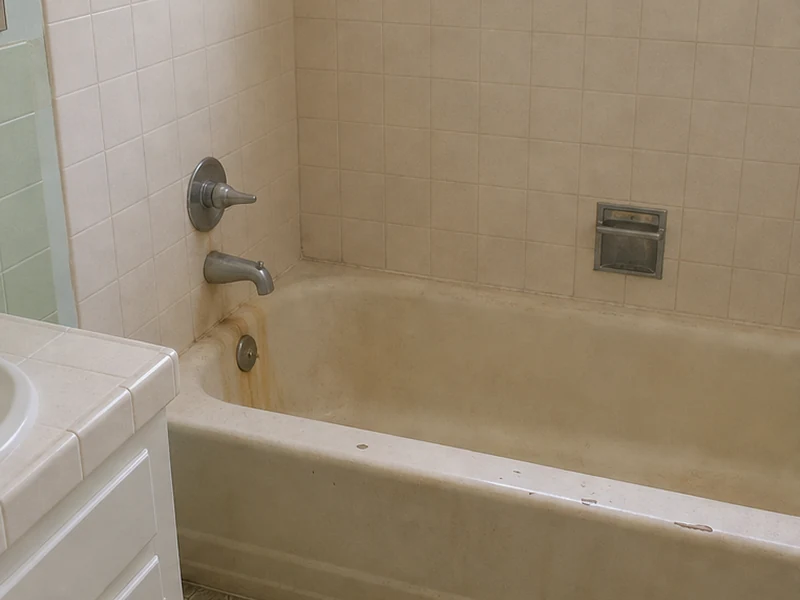
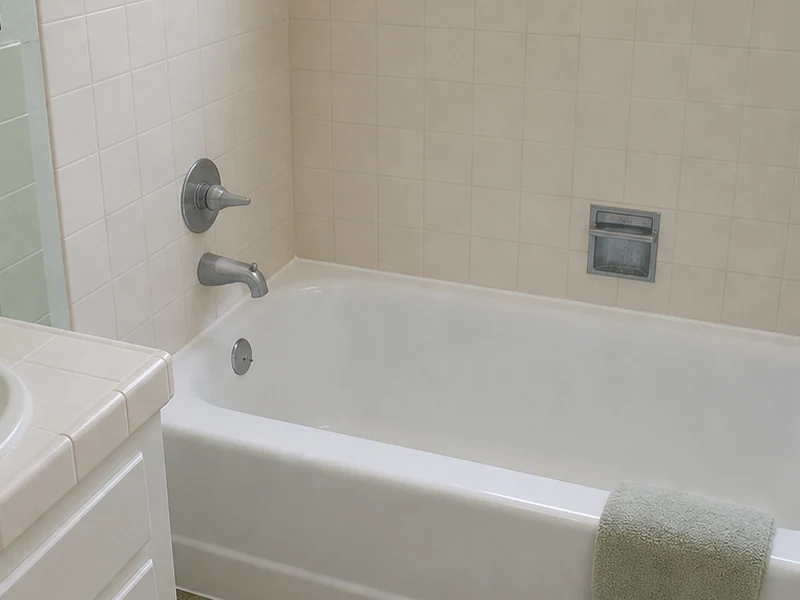
Reglazed instead of replaced — Clayton Valley
Tap to compare a cast-iron tub the owner nearly tore out, reglazed in a day for a fraction of a replacement.
Reglaze vs replace FAQ
Is it cheaper to reglaze or replace a bathtub in Concord?
Reglazing is far cheaper. A Concord reglaze runs $705–$870 and is done in a day. Replacing the same tub — demolition, a new tub, surround tile, waterproofing, plumbing and disposal — typically runs $3,000–$8,000 and takes a week. That is a $2,300–$7,100 difference for a sound tub that is only dated or surface-worn. Call (510) 746-8748 or book online for a free Concord quote.
How long does a reglazed tub last versus a new one?
A professionally reglazed Concord tub lasts 10–15 years before you would consider redoing it. A new tub lasts decades, but its surface enamel ages on the same curve — and when it dulls, you reglaze that one too. For most homes the lifespan gap does not justify the cost and demolition gap.
When should I replace a tub instead of reglazing it?
Replace when the tub is a structural loss or the wrong fixture: a shell cracked through, a fiberglass floor gone spongy past reinforcement, severe rust-through on a steel tub, or a changed layout or accessibility need such as a walk-in or curbless shower. We say so on the walkthrough rather than coat over a real problem.
Does reglazing hurt resale value compared to a new tub?
A clean, glossy reglazed tub shows as well as new to a buyer and removes the dated almond or avocado that drags a listing. What hurts resale is a worn, stained tub left as-is. Reglazing is one of the lowest-cost moves to freshen a Concord bathroom before listing.
Local proof
Why this Bathtub Reglazing vs. Replacement page is specific to Concord
This service page is tied to the fixtures we actually quote around Concord: ranch-house cast-iron tubs, fiberglass shower stalls, rental repairs, and dated tile surrounds. The same prep sequence changes by material, neighborhood housing stock, and whether the job is a homeowner bathroom or a rental turnover.
| Local situation | What we verify | Best next page |
|---|---|---|
| Dana Estates / Clayton Valley older homes | Cast-iron or steel tub, rust at the drain, chipped rim, old caulk line | Porcelain and cast-iron tubs |
| Northgate / Sun Terrace rentals and condos | Fiberglass flex, crazed gelcoat, failed DIY finish, fast turnover timing | Fiberglass and acrylic tubs |
| Monument Corridor / Ygnacio Valley bathroom refreshes | Whether tub, tile, sink and counter should be bundled in one visit | Current price ranges |
- Photos help the quote: send the whole fixture, drain area, chips or cracks, and one photo of the bathroom layout before we schedule.
- Price context is visible: this page links to the current Concord pricing, project examples, process, reviews and contact page instead of leaving the decision isolated.
- Local service path: if this is not the exact surface you need, the pages below point to the closest matching Concord fixture guide.
Get a straight reglaze-or-replace read in Concord
Open Mon–Sat 7:30 AM–6 PM. Fully licensed & insured, with a written 5-year warranty.